

This article was originally published in the Spring 2004 issue of The Catholic Dimension, and is re-posted here for public reference.
The Separate School Regions Establishment and Provision of Services Order, A.R. 109/2002, allows separate school boards the right to expand, at the request of electors, within separate school regions. It is an alternative to the establishment of new 4x4 districts, later amalgamated into existing separate school districts or regional divisions.
Such expansions have been approved by the Minister of Learning for the Grande Prairie and Holy Spirit Catholic school boards and are currently in progress in the jurisdictions of the Calgary, Elk Island, Evergreen, Holy Family, Holy Spirit, Lakeland and Living Waters Catholic school boards.
One of the most significant events during the expansion process is the holding of a public meeting to discuss the request for expansion and answer questions from the public. A number of the questions and answers given at public meetings to date have been fundamental to understanding the following:
- the rights of Catholic electors to such expansion;
- the fundamental difference between expansion and traditional 4x4 formation; and
- the effect of expansion upon Catholic electors, public electors and the community at large.
Set out in this article are a number of the questions which have been asked or may be asked, and answers given with respect to this new process.
Legislation Allowing Expansion of Catholic School Districts
1. Question: What is the specific legislation that constitutionally allows separate Catholic electors to expand or alter the boundaries of established separate school districts?
Answer: Chapter 29 of the Ordinances of the Northwest Territories, 1901, the School Ordinance, contains the following:
"48. The commissioner may by Order notice of which shall be published in the official gazette alter the boundaries of any district by adding thereto or taking therefrom or divide one or more existing districts into two or more districts or unite portions of any existing district with another district or with any new district in case it has been satisfactorily shown that the rights of rate payers under section 14 of the North-West Territories Act to be affected thereby will not be prejudiced and that the proposed changes are for the general advantage of those concerned."
Section 14 of the North-West Territories Act, 1886, as amended in 1898, reads as follows:
"14. The Lieutenant Governor in Council shall pass all necessary ordinances in respect to education; but it shall therein always be provided, that a majority of the rate payers of any district or portion of Territories, or of any less portion or subdivision thereof, by whatever the same is known, may establish such schools therein as they think fit, and make the necessary assessment and collection of rates therefore; and also that the minority of the rate payers therein, whether Protestant or Roman Catholic, may establish separate schools therein, and in any such case, the rate payers establishing such Protestant or Roman Catholic separate schools shall be liable only to assessments of such rates as they impose upon themselves in respect thereof . . ."
The provisions of the School Act which address the above mentioned sections are sections 221.2, Division 2.1: "Establishment of Separate School Regions" and section 229, proceduralized in the Separate School Regions Establishment and Provision of Services Order, M.O. 011/2002, A.R. 109/2002. That is made clear by the provisions of section 22 of that Regulation which specifically adopts the wording of section 48 of the Northwest Territories School Ordinance, 1901:
"22. Upon receipt of a statement from the Public School Board and following a public meeting under section 21 and upon receipt of the minutes of the public meeting, the Minister may, under section 239 of the School Act, add land in the Separate School Region to the separate school district or division if the Minister is satisfied that the addition of the land does not prejudice the rights of separate school rate payers in the expansion area and is for the general advantage of those concerned."
Affect on Traditional 4x4 Formation
2. Question: Does the new consultative expansion process under the Separate School Regions Establishment and Provision of Services Order affect traditional 4x4 formation?
Answer: This new process specifically provides in section 24 that it does not affect traditional 4 x 4 formation which is constitutionally protected and remains unamended in sections 212 through 221, Division 2, Part 8 of the School Act. It merely contemplates an equally constitutionally-protected method of expansion of Catholic Education which is supplemental, and in addition to, the traditional constitutionally-protected 4 x 4 formation.
The Right to Vote
3. Question: In the new consultative expansion process, is it necessary that members of a minority faith who live in the proposed expansion area be given the right to vote for or against the expansion?
Answer: The right to vote of a member of the minority faith is essential with respect to the constitutionally-protected right for "formation" of a new separate school district. However, it is not the test with respect to the constitutionally-protected "expansion" of separate school districts. The appropriate test with respect to expansion is found in section 22 of the Separate School Regions Establishment and Provision of Services Order:
". . . the Minister (must be) satisfied that the addition of the land does not prejudice the rights of separate school rate payers in the expansion area and is for the general advantage of those concerned."
However, we believe that the process for expansion allows for very extensive consultation, participation and co-operation of all parties affected, including but not limited to members of the minority faith.
Fully Permeated Catholic Education
4. Question: Must a Catholic separate school be Catholic and provide a fully permeated denominational education?
Answer: Under the system of separate school 4x4 formation (School Act, Part 8, Division 2, ss. 212-221) it is clear that once a new separate school district is established or formed, it "must have some degree of denominational character," "cannot simply operate a public school by another name" and should offer "formal religious education (as a) . . . means of promoting or preserving Roman Catholic beliefs and values . . . " (Jacobi v. Newell No. 4 (County), (1994) 16 Alta. L.R. (3d) 373 at 395). If that rationale extends to the new system of expansion of separate school districts or regional divisions within Separate School Regions (School Act, Part 8, Division 2.1, ss.221.1 and 221.2) the expanding separate school district or regional division will be required by law to provide a fully permeated Catholic Education. This will include denominational character in the schools in the expansion areas, with Catholic administration, utilizing the approved separate school curriculum and be under the guidance, authority and control of the local bishop.
Census of Catholic Electors
5. Question: Is it necessary to take a census of Catholic separate school supporters as part of the expansion or alteration of boundaries of a Catholic separate school district?
Answer: A census of school electors in the areas proposed for expansion is not a requirement for the expansion or alteration of boundaries of an existing separate school district or regional division (Section 221.2 of the School Act and the Separate School Regions Establishment and Provision of Services Order). A census is a requirement for the establishment or formation of a new separate school district (Part 8, Division 2, Sections 212 to 221 of the School Act). The reason a census is not required under the currently-utilized consultative expansion system is that a new separate school district is not being created. The Minister of Learning is simply using the Ministerial powers provided to him to "add land to . . . a district or a division" (Section 239 of the School Act). The question as to whether Catholics or Protestants are in the majority or the minority is only relevant to the establishment or formation of a new separate school district because the minority status and "separateness" of the existing separate school district has already been established. As a result, a census to establish majority or minority status is not necessary under the Separate School Regions Establishment and Provision of Services Order.
Constitutional Protections for Catholic School Rights
6. Question: What are the basic constitutional protections for Catholic separate school rights?
Answer: Constitutional protections for separate school ratepayers in Canada are set out in the Constitution Act, 1867 in the following section:
"93. In and for each Province the Legislature may exclusively make Laws in relation to Education subject and according to the following provisions:
(1) Nothing in any such Law shall prejudicially affect any Right or Privilege with respect to Denominational Schools which any Class of Persons have by law in the Province at the Union:"
For Alberta, section 93(1) of the Constitution Act, 1867 is modified by section 17(1) of the Alberta Act, 1905:
"17. Section 93 of the Constitution Act, 1867, shall apply to the said province, with a substitution for paragraph (1) of the said section 93, of the following paragraph: (1) Nothing in any such law shall prejudicially affect any right or privilege with respect to separate schools which any class of persons have at the date of the passing of this Act, under the terms of chapters 29 and 30 of the Ordinances of the North-west Territories, passed in the year 1901, or with respect to religious instruction in any public or separate school as provided for in the said Ordinances."
These constitutional protections are reinforced by section 29 of The Charter of Rights of Freedoms:
"29. Nothing in this Charter abrogates or derogates from any rights or privileges guaranteed by or under the Constitution of Canada in respect of denominational, separate or dissentient schools."
Legislation Allowing Formation of Catholic School Districts
7. Question: What is the specific legislation that constitutionally allows separate Catholic ratepayers to form new separate school districts?
Answer: Chapter 29 of the Ordinances of the Northwest Territories, 1901, the School Ordinance, contains the following sections with respect to the formation of new separate school districts:
41. The minority of the rate payers in any district whether Protestant or Roman Catholic, may establish a separate school therein; and in such case the rate payers establishing such Protestant or Roman Catholic separate school shall be liable only to assessments of such rates as they impose upon themselves in respect thereof.
42. The petition for the erection of a separate school district shall be signed by three resident rate payers of the religious faith indicated in the name of the proposed District; and shall be in the form prescribed by the commissioner.
43. The persons qualified to vote for or against the erection of a separate school district shall be rate payers in the district of the same religious faith Protestant or Roman Catholic as the petitioners.
44. The notice calling a meeting of the rate payers for the purpose of taking their votes on the petition for the erection of such school district shall be in the form prescribed by the commissioner and the proceedings subsequent to the posting of such notice shall be the same as prescribed in the formation of public school districts.
45. After the establishment of a separate school district under the provisions of this Ordinance such separate school district and the board thereof shall possess and exercise all rights, powers and privileges and be subject to the same liabilities and method of government as is herein provided in respect of public school districts.
(2) Any person who is legally assessed or assessable for a public school shall not be liable to assessment for any separate school established therein."
The School Act provisions which address the formation rights of separate school electors, as guaranteed by sections 41 through 45 of the Northwest Territories School Ordinance, 1901, are sections 212 through 220, Division 2: "Establishment and Dissolution of Separate School Districts". Those provisions are commonly known as the "4 x 4" provisions of the School Act.
Concerns About Fragmentation
8. Question: Doesn't the expansion of Catholic separate school districts cause a fragmentation of public school education and fragmentation of the community?
Answer: The constitutional compromise forged by the Fathers of Confederation at the Charlottetown Conference in 1864 and at the London Conference in 1866 specifically recognized that this country would not come into being without allowance for members of the minority faith to educate their children in their own faith, even if it meant that for some purposes of education they were "separate" or "fragmented" from the majority public education system. That sentiment was reflected by Prime Minister Sir Charles Tupper, in the House of Commons on March 3, 1896:
". . . I say it within the knowledge of all these gentlemen.... that but for the consent to the proposal of the Hon. Sir Alexander Galt, who represented especially the Protestants of the great province of Quebec on that occasion but for the assent of that conference to the proposal of Sir Alexander Galt, that in the Confederation Act should be embodied a clause which would protect the rights of minorities, whether Catholic or Protestant, in this country, there would have been no Confederation . . . I say, therefore, it is important, it is significant that without this clause, without this guarantee for the rights of minorities being embodied in that new constitution, we should have been unable to obtain any confederation whatsoever."
In addition, the existence of separate schools, alleged to be a "fragmentation" of the community and of the public school system, has provided Alberta with one of the best educational systems in the world, substantiated over and over again by international testing standards. Alberta's success, in part, is due to this dual dimension of the public education system-the Catholic and public school systems. Catholic schools in communities enhance educational opportunities and provide alternative choices for parents. This applies to communities both large and small. The very educational success we are now enjoying internationally is due, in part, to this dual nature of the system that allows choice for parents.
Enrollment of Non-Catholic Students
9. Question: If the separate Catholic school district is expanded, is it required to accept in the expansion area all persons of all denominations for enrollment in its schools?
Answer: Sections 44 and 45 of the School Act require that if a Catholic separate school district is expanded over a new area, then those individuals residing within the expanded boundaries of the separate Catholic school district who are Catholic, will become residents of the Catholic separate school district and cease to be residents of the public school district. However, a school board is required to enroll resident students of another board upon request of the parent of the student, if in the opinion of the enrolling board there are sufficient resources and facilities available to accommodate the student. If non-resident students of the board of an expanding separate school district or regional division make an appropriate request, the board will be required to determine whether there are sufficient resources and facilities available to accommodate the non-resident student and if so, to enroll them in any of its schools, including schools which may be transferred to it by expansion.
Affect on School Utilization Rates
10. Question: Doesn't the expansion of Catholic separate school districts or regional divisions affect the school utilization rates of the public school board?
Answer: The concern with school utilization rates is shared by virtually all rural school boards in Alberta. The solution to low utilization rates must be a joint solution arrived at between rural school boards and Alberta Infrastructure. We recognize that declining population in rural areas, including the issue of school utilization rates, is a complex and multi-faceted issue that needs the attention of both public and Catholic school boards, but it is not a reason to deny anyone their constitutional rights to choose Catholic Education.
Alberta has one of the best educational systems in the world and this has been substantiated repeatedly by international testing standards. Alberta's success, in part, is due to our multi-dimension of the public education system, of which Catholic schools are a part. Catholic schools enhance educational opportunities and provide alternative choices for parents. The very success we are now enjoying internationally is due, in part, to the multi-dimensional nature of our system that allows this choice for parents.
Co-Terminality
11. Question: It is true that when a Catholic separate school district expands or alters its boundaries, it must become coterminous with its public school neighbours?
Answer: It is true that when separate school electors wish to form new separate school 4x4's, they must do so based upon the boundaries of the original and now long obsolete 4x4 public school districts. Section 219(1) of the School Act provides that "the Minister shall by Order establish the separate school district with the same boundaries as those of the public school district." This section falls within Part 8, Division 2, ss.207 through 221 of the School Act, which addresses the formation of new separate school districts by what we know as "4x4 formation." Requests of separate school electors under the Separate School Regions Establishment and Provision of Services Order is not for a new 4x4 formation, but for expansion of an already established separate school district or regional division and provision of services in the expanded area (Part 8, Division 2.1, Sections 221.1 and 221.2 of the School Act). The 4x4 process is completely separate from and not affected by the new consultative expansion process. The 4x4 formation can proceed without the new consultative expansion process, at any time during the new consultative expansion process, or if the process has not resulted in expansion of the existing separate school jurisdiction (Section 24 of the Separate School Regions Establishment and Provisions of Services Order).
Rolled-Up 4x4s
12. Question: What are "rolled-up 4x4s," and are they different than this new consultative expansion process?
Answer: The Minister of Learning has the ability to re-arrange the original and now obsolete public school 4x4's into a single, larger public school district for the purpose of forming in this larger area a new separate school district. Separate school electors in adjoining original 4x4 public school districts are entitled to request that the Minister "roll-up" these original 4x4 public school districts for the purpose of forming a larger separate overlaying school district. These "rolled-up 4x4 formations" are also accomplished pursuant to Part 8, Division 2, Sections 212 through 221 of the School Act and are also completely distinct from and not affected by this new consultative expansion process.
Affect on the Public School District
13. Question: Does the new consultative expansion process take land away from or leave a large hole in the public school district?
Answer: The request for the expansion or alteration of boundaries of a separate school district does not entail the transfer of land from the public school district or division to the separate school district or regional division. The jurisdiction of the public school district or division would not be altered and would always underlie any expanded jurisdiction of the Catholic separate school district or regional division as public school districts always, by definition, underlie separate school districts. There would never be "a large hole" in the area served by the public school jurisdiction, as the public school jurisdiction would be unaltered despite the expansion or boundaries alteration.
Formation vs. Expansion
14. Question: Does Section 221.3 of the School Act require that a new separate school district be formed under Division 2 of the School Act whenever services by a separate school board are to be extended to areas where such services have not been previously provided?
Answer: The Separate School Regions Establishment and Provision Of Services Order is a Ministerial Order confirmed by Alberta Regulation pursuant to sections 221.1, 221.2 and 239 of the School Act. It allows the Minister of Learning to "provide for services by a separate school board in a Separate School Region and is the consultative expansion process. On the other hand, section 221.3 allows the Minister to make regulations in respect of the establishment or formation of a new separate school district in the region "under Division 2." This is an establishment or formation provision, not an expansion provision and references establishment or formation under Division 2, rather than expansion under Division 2.1. Therefore, section 221.3 of the School Act is referable to the traditional 4x4 formation provisions of Part 8, Division 2, sections 212 through 221 of the School Act.
This article was originally published in the Fall 2005 issue of The Catholic Dimension, and is re-posted here for public reference.
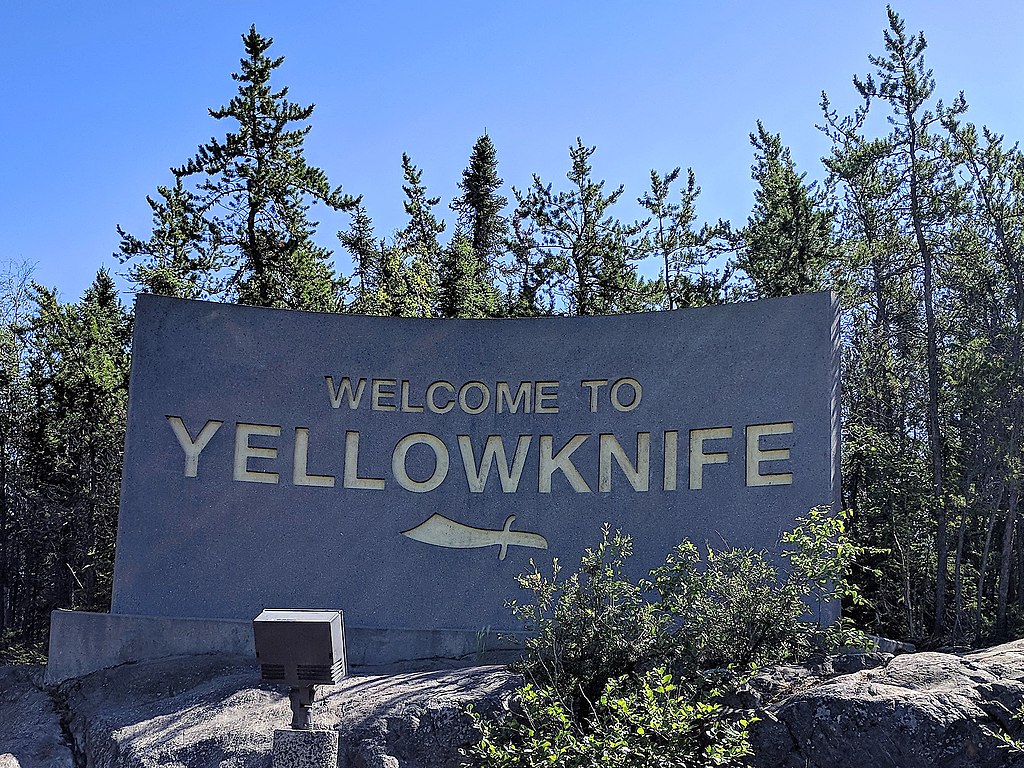
The Alberta Catholic School Trustees' Association includes as one of its member boards, the Yellowknife Separate Education District No. 2, established in 1951. St. Patrick Elementary School in Yellowknife opened in 1953 and is now a high school. It has been joined by two other schools, St. Joseph and Weledeh Catholic schools.
Unlike Alberta and Saskatchewan, the various Northwest Territories Acts have never been listed in Schedule "B" to the Constitution Act, 1982 as "constitutionally entrenched," by which these acts would be no longer subject to amendment by Legislation of the Parliament of Canada, but only pursuant to the constitutional amending formula set out in the Constitution Act, 1982. The search for the constitutionally protected rights of Catholics in the Northwest Territories is therefore less direct than in Alberta and Saskatchewan.
In the Northwest Territories, the constitutionally entrenched legislation includes the Rupert's Land and the North-Western Territory Act of 1869, the Rupert's Land and the North-Western Territory Order of 1870, the Adjacent Territories Orders of 1880, and the various constitution acts of 1871, 1886 and 1975. Pursuant to those acts and the Constitution Act, 1867, the federal government was empowered to pass the various Northwest Territories acts which are the constitution of the Northwest Territories and binding upon the legislature of the Northwest Territories, although not constitutionally entrenched with respect to the federal government. That is, a federal government may change the Northwest Territories Act from time to time, as ordinary federal legislation, but these acts are "constitutionally binding" on the Northwest Territories legislature.
The first Northwest Territories Act provision to specifically identify the right to establish a separate school system was Section 11 of the Northwest Territories Act, 1875, which confirmed that the Lieutenant Governor of the Northwest Territories had jurisdiction to pass all necessary ordinances with respect to education, but subject to the condition that the majority of rate-payers in any district or portion of the Territories could establish a public school, and the minority could establish a separate school. The relevant portions of that section read as follows:
" . . . the minority of the rate-payers . . . , whether Protestant or Roman Catholic, may establish separate schools . . . and . . . the rate-payers establishing such Protestant or Roman Catholic separate schools shall be liable only to assessments of such rates as they may impose upon themselves . . . "
That provision was consolidated in the 1880 Act and restated in 1886, although at that date, the authority formerly vested in the Lieutenant Governor was transferred to the Legislative Assembly. By 1906 the authority to establish a separate school was vested in the Commissioner in Council, and these basic constitutional protections were restated in the various Northwest Territories Acts of 1927 (Section 12), 1952 (Section 13(r)) and 1985 (Section 16(n)), where the current protection is almost identical to that first enacted 110 years earlier:
". . . the minority of the ratepayers in the area . . . whether Protestant or Roman Catholic, may establish separate schools . . . , in which case the ratepayers establishing Protestant or Roman Catholic separate schools are liable only to assessments of such rates that they impose on themselves . . . "
The protections granted to separate minority denominational education in the Northwest Territories are equivalent to those protections granted in Ontario, codified in s.93(1) of the Constitution Act, 1867, and in Alberta and Saskatchewan, set out in Section 17 of the Alberta Act, 1905 and the Saskatchewan Act, 1905. Those educational protections are not frozen in time, nor can or should they be comprehensively listed, but they include at least the following:
- The right or privilege to form a new separate school district;
- The right or privilege to levy assessments upon the electors of the separate school district; and
- The right or privilege not to be liable to assessments levied by any party other than the separate school district.
The current Northwest Territories Education Act, preserves this right to separate denominational education in Section 11, which provides that a parent of a student, or an adult student, is entitled to receive an education program through a "public denominational school" in the Northwest Territories.
All of the case law with respect to the rights and privileges of separate school electors in Ontario, Alberta and Saskatchewan are therefore directly applicable to the Catholic separate school electors in the Northwest Territories. The Alberta Catholic School Trustees' Association's advocacy for the protection and enhancement of those rights to Catholic separate education is therefore on the same footing and equally applicable in the Northwest Territories as it is in Alberta.
ACSTA's efforts to protect enhance the rights to Catholic education is on the same footing and equally applicable in the Northwest Territories as it is in Alberta.

548.
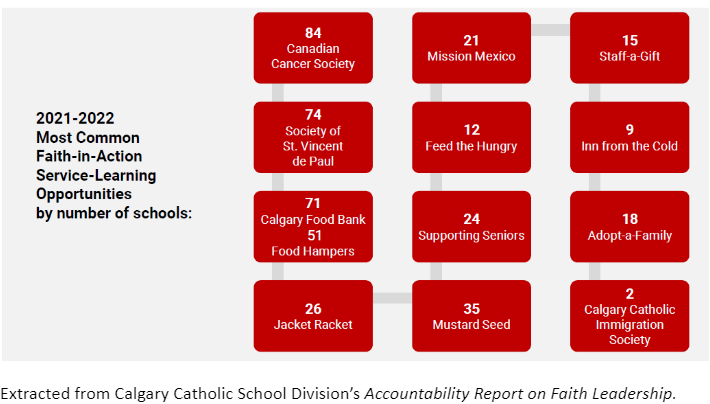
That’s a number that I keep on a post-it on my office wall. Why? It’s the number of service learning projects that the Catholic schools in our division completed last year.
Notwithstanding the dangers of vanity and pride, it’s a number that I’m happy to share when I speak about the blessings of Catholic schools. Students at all grade levels and in every location have the opportunity to identify areas of need, explore how they can make a difference, and then put their faith into action through service. In Calgary Catholic, we are blessed with a board of Catholic school Trustees that have expressed their commitment to providing service learning opportunities for all students as a priority item in our division’s three-year education plan. That expression provides staff with the direction that we need to prioritize such opportunities in our schools. 
Engaging in service learning isn’t just about meeting an arbitrary goal for dollars raised, or cans of soup collected; it’s an opportunity to provide real-life experiences grounded in Catholic social teaching. It gives our students (and staff) opportunities to demonstrate respect for the inherent dignity and worth of human beings, a preferential option for the poor, and active community participation.
It looks a little different in each place. Sometimes, it’s the delivery of custom made Christmas cards to a community seniors’ residence. Other times, it’s a school-wide commitment to Chalice and the provision of funds to support communities in the developing world. Always, there is an emphasis on knowing and praying for those we serve.
When we reflect on the wide variety of projects taken on by our schools, it is easy to focus on the immediate impacts. More important, however, are the students’ opportunities for self-transformation. By engaging in service projects, students can develop a deeper sense of empathy and compassion – and can learn to see the world through the eyes of others. Service learning can also help students develop a sense of purpose and meaning in their lives, as they recognize the importance of using their talents and abilities to make a positive difference in the world.
When we guide our students in service-learning, we teach them to imitate Christ in habits of heart, mind and action. And, when we speak about the distinctiveness of Catholic education, our commitment to service is something that is core to our being as Catholics. This very Thursday at Mass, for example, we will hear the Gospel reading that perfectly embodies that:
So if I, your Lord and Teacher, have washed your feet, you also ought to wash one another’s feet. For I have set you an example, that you also should do as I have done to you. (John 13:14-15)
We should be excited to celebrate and share the Good News of how our students are being transformed and carrying out these acts of charity in our schools. This school year is rushing towards its conclusion – soon, our schools will be reporting back about the service projects they completed. One post-it note will come down and the next will go up…and I can’t wait!
John Wasch currently serves as the Director of Catholicity for the Calgary Catholic School District. He has served as a teacher and administrator for 27 years in the field of publicly funded Catholic education.
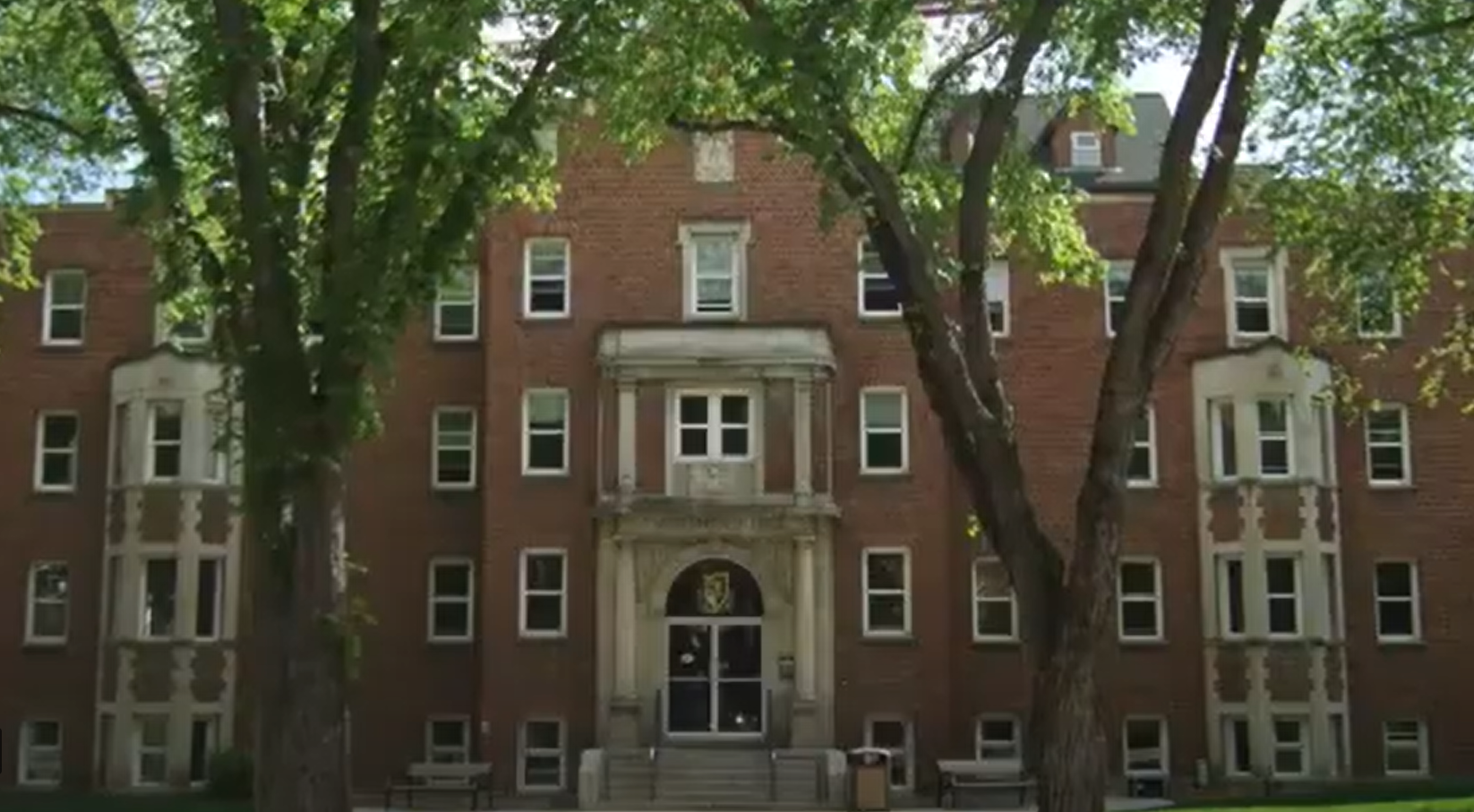
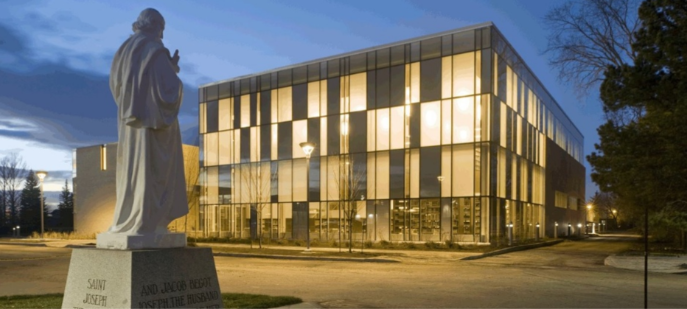
Colleges and Universities have a long and storied history in the Catholic domain. Indeed, it was within a particular Catholic context that ‘the University’ as such came into existence. The Church continually sees the need for and places value in these places of inquiry and learning, for who is Christ if not the teacher par excellence? There are three post-secondary Catholic institutions in Alberta: St. Joseph’s College (Edmonton), Newman Theological College (Edmonton), and St. Mary’s University (Calgary). These three institutions have similar missions, mandates, and are jointly a net benefit to the larger project of Catholic education in Alberta. Our contexts are markedly different, however.
As the Dean of St. Joseph’s, I’ll be presenting the unique context of St. Joe’s, as it is affectionately called. Sometimes St. Joe’s is called ‘the best kept secret at the UofA’. One of my jobs is to make it the worst kept secret.
Who We Are:
We teach and research in Catholic thought at the premier public research university in Alberta and one of the best universities in the country, consistently ranking in the top 125 universities world-wide. We allow for a space at the University of Alberta where questions of meaning, faith, and human thriving can be integrated and asked in a qualified academic framework, and this provides added value to UofA students, to the UofA at large, and to Catholic education in Alberta.
Some basic facts:
- St. Joe’s has 8 full-time tenure-track professors and 2 professors emeriti with PhDs from some of the best universities in the world (Toronto, Leuven, Cambridge, Alberta, Catholic University of America)
- We have a team of 20-25 talented, dedicated ‘sessional’ instructors, many of whom have terminal degrees in their field and extensive practical experience as educators or educational administrators.
- Our professors and instructors have cumulatively published over 20 books and 80 articles in the last 7 years, many in the most prestigious academic venues in their fields.
Teaching:
What really animates St. Joe’s Academics is teaching. We are passionate about teaching within our context, to Alberta’s and Canada’s future leaders, and all our classes are UofA Arts options.
We teach approximately 2000 students per year across +/- 70 courses and these cover the gamut of religious education, biblical studies, moral theology, history of Christianity, philosophy, science and religion and beyond. Our students regularly speak to the transformative impact of these courses on their personal, academic, and professional lives. St. Joe’s is a gem at the UofA and in Alberta – for there is nowhere else in Alberta that students at a public research university, who otherwise would not be educated by remarkable instructors in Catholic thought, take such courses.
Our Programs:
- Certificate in Catholic Education: This Certificate is a four-course sequence designed to introduce students to teaching in the Catholic primary and secondary system in Alberta. The Certificate ladders from general exposure to Catholic fundamentals (the first two courses treating, broadly, the Bible and fundamental catechetics) to pedagogical issues of how to teach within a Catholic district context. In sum, the Certificate provides a broad exposure to both fundamentals of Catholic doctrine and practical issues of how to teach in a Catholic context. We have signed MOUs with 11 of the 18 Catholic school districts in Alberta for the Certificate, which allows the Certificate to be considered a ‘hiring asset’ in our collaborating districts and helps connect potential teachers to recruiting districts.
- Minor in Christian Theology: In any given year, we have 30 to 40 minors in Christian Theology, which students choose to take as a supplement to their chosen course of studies at the UofA.
Campus Ministry, Chapel, and Residences:
St. Joe’s is a community with the larger UofA community, a place that many students call ‘home’ both literally and figuratively. We offer the only single-sex residences at the UofA, with spaces for 284 women in a newly built facility and 63 spaces for men in our historic building. These residences are a basic aspect of our community, as is our thriving campus ministry and chapel community. St. Joe’s offers daily mass and has 4 masses over the weekend, with 7pm Sunday mass catering in particular to St. Joe’s and UofA students.
Final Thoughts...
St. Joe’s is a remarkable place at the heart of a major research university, where Canada’s future leaders can be exposed to the richness of Catholic thought and spirituality as they embark on the next phase of their lives. It is a place that, together with St. Mary’s University and Newman Theological College, benefits Catholic education in Alberta and the Church in Alberta and beyond.
Dr. Matthew Kostelecky is the Vice-President (Academic) and Dean of St. Joseph's College at the University of Alberta. He holds a PhD in philosophy from the Katholieke Universiteit Leuven, specializing in the thought of St. Thomas Aquinas, as well as a BA in philosophy from the University of Dallas. Prior to joining St. Joseph's College in 2009, Dr. Kostelecky was an Assistant Professor at St. Francis Xavier University in Nova Scotia.
You have made us for yourself, O Lord, and our heart is restless until it rests in you. - St. Augustine
There are opportunities in a lifetime that humble us from thinking that we know many things to realizing that we do not know nearly enough. For me, the Master of Religious Education (MRE) Program at Newman Theological College was one of those rare gifts.
The MRE has not only become a game changer in my life; it has become a crucial road sign for my spiritual journey. In my studies, I was introduced to the writings of the Catholic apologists, the Church Fathers, the Popes, and leaders of the Christian faith. I was re-acquainted with the Catechism of the Catholic Church, the General Directory of Catechesis, and the Catholic Social Teachings. Most importantly, I was able to trace Salvation History throughout the Old and New Testaments, feeling more deeply God’s prodigal mercy and extravagant love for me. With the support of family, Edmonton Catholic Schools, the Newman Theological College’s teaching and support staff, and the accompaniment of my cohort, I renewed my commitment to Jesus as the center of all Scripture and the salvation of humankind.
The courses were designed to encourage not only private reflection and personal work, but also the gathering of information, the sifting through of resources and the collaborating with like-minded colleagues in and out of my school division. Being at the receiving end of instruction was a refreshing break from my regular duties.
What started out as an academic and professional challenge morphed into a layered gift that peeled off as each course was completed and still continues to surprise me today by its unfolding. Yet, the impact of the program did not end on its completion. With the understanding of the program’s content and the acquisition of the skills that it honed; I became more intentional about “faith seeking understanding.” I discerned writings more closely, questioned statements more deeply, tried to forgive more easily, aimed to serve more freely, and dedicated to living more in the moment.
That is not to say that finishing the program was easy. Over the course of four years, I had to rotate my dining chairs to prevent each one from getting a permanent dent from my nightly reading and writing to complete assignments. When I finished the program, I re-upholstered the full set! Lots of work, but every minute was worth the effort.
What I received from the MRE program I now consistently use in my roles as a Junior High Religion Teacher, School Chaplain, All-City JH Choir Director, and Parish Music Coordinator. It is a privilege and a blessing to be able to continue my faith journey and intersect it with my professional path so closely.
As we move forward into the future, I hope that many more educators will avail themselves of this wonderful opportunity and enter through the doors that will ultimately open to amazing possibilities.
Read more about Newman's Masters in Religious Education program here.
Beth Pecson is an accomplished choral director, music teacher, pianist and church musician working in Edmonton, Alberta.
For the past 30 years Beth has taught with Edmonton Catholic Schools as a music specialist and a Junior High Religion teacher. She was a recipient of the 2017 Excellence in Catholic Education Award given by the CCSSA (Council of Catholic School Superintendents of Alberta). She received her Master of Religious Education Degree (with Distinction) from Newman Theological College and was the recipient of the 2017 graduating class's Emmaus Award.
She has highlighted her students, from kindergarten to high school, at various division liturgical and fine arts celebrations and at local, provincial, and national music festivals.
Beth directs the Monsignor Fee Otterson Junior High School Choir and the ECSD (Edmonton Catholic School Division) All-City Junior High Choir.
She serves as the music ministry coordinator of Annunciation Catholic Church and lives in Edmonton with her husband and their four beautiful children.
Page 2 of 6